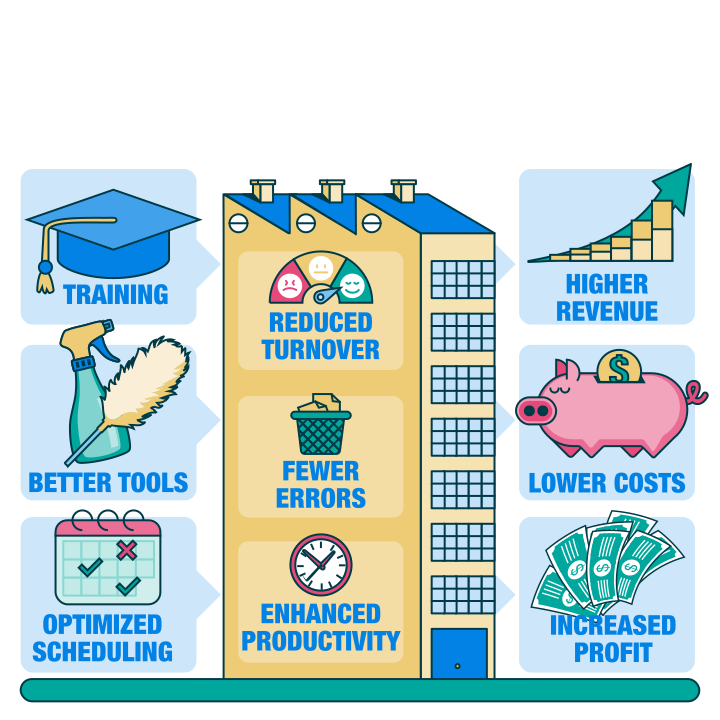
A 52 week schedule is the foundation of a profitable cleaning business. This comprehensive guide reveals how to create and implement a 52 week schedule that maximizes revenue, optimizes team efficiency, and eliminates scheduling chaos.
Why a 52 Week Schedule Matters for Cleaning Businesses
Most cleaning businesses operate reactively—scheduling week by week, scrambling to fill gaps, and missing revenue opportunities. A strategic 52 week schedule changes everything.
According to industry research, cleaning businesses that implement annual scheduling systems see 25-40% higher revenue retention and 30% better team utilization[1]. Here’s why:
- Predictable Revenue – Know exactly what’s coming each week for the entire year
- Optimized Routes – Plan efficient routes that minimize drive time and maximize jobs per day
- Better Team Planning – Hire and schedule staff based on actual demand patterns
- Reduced No-Shows – Customers with standing appointments are 3x less likely to cancel
- Strategic Growth – Identify capacity gaps and target new customers to fill them
📊 Industry Benchmark
Top-performing cleaning businesses maintain 90%+ schedule fill rates throughout the year, while average businesses hover around 65-70%. That 20-25% difference translates to $100K-$300K in annual revenue for a mid-sized operation.

The Complete 52 Week Schedule Framework

Building an effective 52 week schedule requires strategic planning across multiple dimensions. Here’s the proven framework successful cleaning businesses use:
Phase 1: Analyze Your Current State
Before building your 52 week schedule, understand where you are today:
- Audit Existing Customers – List all active customers with service frequency (weekly, bi-weekly, monthly). Calculate total weekly recurring revenue and identify your most profitable service days.
- Map Service Areas – Plot customer locations on a map and identify geographic clusters. This reveals route optimization opportunities and capacity gaps in specific areas.
- Calculate Team Capacity – Determine how many jobs each team can complete per day based on average job duration and drive time. Factor in realistic productivity rates, not ideal scenarios.
- Identify Seasonal Patterns – Review historical data to understand demand fluctuations throughout the year. Most cleaning businesses see 20-30% variation between peak and slow seasons.
- Assess Current Fill Rate – Calculate what percentage of available time slots are currently filled. This becomes your baseline for improvement.
Phase 2: Design Your Ideal Schedule Structure
With data in hand, design your optimal 52 week schedule:
- Define Service Zones – Divide your service area into 3-5 geographic zones. Assign specific days to each zone to minimize drive time and maximize efficiency.
- Create Route Templates – Build standard routes for each day that group customers by location. Leave buffer slots for new customers in each zone.
- Balance Weekly vs. Bi-Weekly – Strategically mix service frequencies to maintain consistent weekly revenue. Aim for 60-70% weekly customers as your revenue foundation.
- Plan for Seasonality – Build flexibility into slower months with one-time deep cleans and special projects. Schedule annual services (spring cleaning, move-outs) during predictable periods.
- Set Capacity Targets – Establish fill rate goals for each week of the year. Account for holidays, vacation periods, and seasonal fluctuations.
💡 Pro Tip
The most profitable cleaning businesses maintain 85-90% fill rates year-round by strategically mixing recurring and one-time services. Use intelligent scheduling software to automatically balance your weekly capacity.
Phase 3: Implement and Optimize
Rolling out your 52 week schedule requires careful execution:
- Communicate with Customers – Notify existing customers of their standing schedule 2-3 weeks in advance. Emphasize the benefits: consistent service day, same team, priority scheduling.
- Fill Capacity Gaps – Identify open slots in your schedule and target marketing to fill them. Focus on acquiring customers in underserved zones on specific days.
- Train Your Team – Ensure technicians understand their routes, schedules, and customer preferences. Provide route maps and detailed job information through mobile scheduling tools.
- Monitor and Adjust – Track fill rates, revenue per day, and team utilization weekly. Make adjustments based on actual performance data, not assumptions.
- Build in Flexibility – Reserve 10-15% of capacity for same-day requests, rescheduling, and emergency services. This prevents overcommitment while capturing additional revenue.

How a 52 Week Schedule Impacts Your Business
The benefits of implementing a strategic 52 week schedule extend far beyond just organization. Here’s the real impact on your bottom line:
Revenue Predictability and Growth
With a 52 week schedule, you can forecast revenue with 90%+ accuracy. This enables:
- Strategic Hiring – Know exactly when you need additional staff based on scheduled demand
- Cash Flow Management – Predict monthly revenue and plan expenses accordingly
- Growth Planning – Identify capacity constraints and plan expansion strategically
- Pricing Optimization – Adjust pricing based on demand patterns and capacity utilization
According to the Professional Cleaning Index Report, businesses using annual scheduling systems achieve 15-20% higher revenue per technician compared to those scheduling week-to-week[2].
Operational Efficiency
A well-designed 52 week schedule dramatically improves operational metrics:
| Metric | Without Annual Schedule | With 52 Week Schedule |
|---|---|---|
| Jobs per Technician/Day | 4-5 | 6-7 |
| Drive Time % | 25-30% | 15-18% |
| Schedule Fill Rate | 65-70% | 85-90% |
| Customer Retention | 70-75% | 88-92% |
Team Stability and Satisfaction
Technicians benefit significantly from consistent, predictable schedules:
- Consistent Income – Predictable hours mean predictable paychecks
- Work-Life Balance – Knowing their schedule weeks in advance enables better personal planning
- Route Familiarity – Serving the same areas builds efficiency and customer relationships
- Reduced Stress – No more last-minute schedule changes or route chaos
This translates to lower turnover. Businesses with structured annual schedules report 30-40% lower technician turnover compared to industry averages[3].
How MaidCentral Simplifies 52 Week Scheduling
MaidCentral was built specifically to help cleaning businesses implement and manage annual scheduling systems. The platform provides:
- Intelligent Route Optimization – Automatically groups customers by location and suggests optimal service days
- Capacity Planning Tools – Visual dashboards show fill rates, capacity gaps, and revenue forecasts for all 52 weeks
- Automated Customer Communication – Sends schedule confirmations, reminders, and updates automatically
- Real-Time Schedule Adjustments – Easily handle cancellations, rescheduling, and new bookings without disrupting your entire schedule
- Performance Analytics – Track fill rates, revenue per day, and team utilization across your entire 52 week schedule
The intelligent scheduling system considers multiple factors simultaneously—customer location, service frequency, team capacity, and route efficiency—to build optimal schedules that maximize profitability.
🚀 Ready to Build Your 52 Week Schedule?
See how MaidCentral’s scheduling tools can help you create a profitable annual schedule that maximizes revenue and team efficiency.
Common Challenges and Solutions
Implementing a 52 week schedule isn’t without challenges. Here’s how to overcome the most common obstacles:
Challenge 1: Customer Resistance to Standing Schedules
Solution: Frame it as a benefit, not a requirement. Emphasize priority scheduling, consistent service day, and the same trusted team. Offer flexibility for occasional rescheduling. Most customers appreciate the predictability once they experience it.
Challenge 2: Seasonal Demand Fluctuations
Solution: Build flexibility into your schedule with a mix of recurring and one-time services. During slower months, promote deep cleans, move-out services, and special projects. Use automated marketing campaigns to fill capacity gaps.
Challenge 3: Last-Minute Cancellations
Solution: Implement a clear cancellation policy (24-48 hours notice). Maintain a waitlist of customers wanting to get on your schedule. Use automated notifications to quickly fill cancelled slots from your waitlist.
Challenge 4: Balancing New Customer Acquisition
Solution: Reserve 10-15% of weekly capacity for new customers and one-time services. This prevents overcommitment while ensuring you can accommodate growth. Use online booking to show available slots in real-time.
Challenge 5: Team Scheduling Conflicts
Solution: Build your 52 week schedule around your team’s availability and preferences when possible. Cross-train technicians to provide backup coverage. Use two-way texting for quick schedule coordination.

Getting Started with Your 52 Week Schedule
Ready to implement a 52 week schedule in your cleaning business? Follow this action plan:
- Week 1: Data Collection – Gather all customer information, service frequencies, locations, and historical revenue data. Audit your current schedule fill rate and identify patterns.
- Week 2: Schedule Design – Map service zones, create route templates, and design your ideal weekly schedule structure. Calculate capacity targets for each week of the year.
- Week 3: Customer Communication – Notify existing customers of their standing schedules. Emphasize benefits and address concerns. Confirm preferences and make adjustments as needed.
- Week 4: Implementation – Roll out your 52 week schedule. Train your team on new routes and procedures. Set up tracking systems to monitor performance.
- Ongoing: Monitor and Optimize – Review fill rates, revenue, and efficiency metrics weekly. Make data-driven adjustments to improve performance continuously.
💡 Pro Tip
Don’t try to build the perfect schedule on day one. Start with your current customers, optimize routes, then strategically fill gaps. Most successful businesses take 3-6 months to fully optimize their 52 week schedule.
Frequently Asked Questions
What is a 52 week schedule for cleaning businesses?
A 52 week schedule is an annual scheduling system that maps out customer service appointments, team assignments, and route planning for the entire year. It provides predictable revenue, optimized routes, and better team utilization compared to week-by-week scheduling.
How do I create a 52 week schedule for my cleaning business?
Start by auditing your current customers and service frequencies. Map customers by location to create service zones. Design route templates for each day that group customers geographically. Use scheduling software to automate optimization and handle adjustments efficiently.
What are the benefits of using a 52 week schedule?
A 52 week schedule provides predictable revenue (90%+ forecast accuracy), optimized routes (15-18% drive time vs. 25-30%), higher fill rates (85-90% vs. 65-70%), and better customer retention (88-92% vs. 70-75%). It also improves team stability and reduces operational chaos.
How does MaidCentral help with 52 week scheduling?
MaidCentral provides intelligent route optimization, capacity planning dashboards, automated customer communication, and real-time schedule adjustments. The platform considers customer location, service frequency, team capacity, and route efficiency to build optimal annual schedules automatically.
How long does it take to implement a 52 week schedule?
Most cleaning businesses can roll out a basic 52 week schedule in 4 weeks: 1 week for data collection, 1 week for schedule design, 1 week for customer communication, and 1 week for implementation. Full optimization typically takes 3-6 months as you refine routes and fill capacity gaps.
Related Resources
- Explore MaidCentral’s Intelligent Scheduling
- See All Platform Features
- Download Professional Cleaning Index Report
- Schedule Free Demo
- Browse More Expert Tips
About MaidCentral: Built by cleaning professionals for cleaning professionals. Learn more.