
Core KPI Bill Per Cleaning

Bill Per Cleaning is the average amount you invoice for each completed job. It’s the quickest lever for profitable growth: even a small lift here increases revenue per visit, improves cash flow, and lowers direct payroll percentage to revenue—without adding more homes or staff. With MaidCentral, owners standardize pricing, automate rate adjustments, and surface add‑ons at the right time so Bill Per Cleaning rises predictably over time. Get month‑by‑month guidance to raise Bill Per Cleaning and the other 11 KPIs. Includes plain‑English definitions, improvement checklists, and forecasting tips.
Core KPI CalendarGrow Faster and Stronger by Tracking These 12 KPIs.
- 12 KPIs explained in plain English
- Monthly improvement tips
- Growth forecasting tools
- Real MaidCentral user examples
Core KPIs
-
 Bill Per Cleaning
-
Quotes Per Week
-
Close Rate Per Week
-
Cleanings Per Home Per Month
-
Revenue Per Technician Per Day
-
Rate Increase Per Year
-
Direct Payroll % to Revenue
-
Customer Attrition Rate Per Month
-
Skip Cleanings Per Day
-
Absentee Rate Per Day
-
Technician Turnover Per Year
-
Operating Expense Per Month




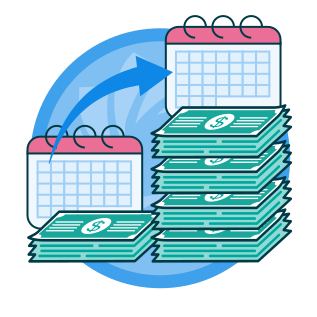


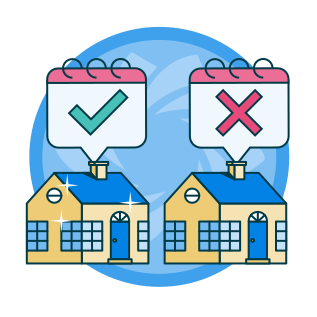



How to Calculate Bill Per Cleaning
The Bill Per Cleaning KPI tells you how much revenue you earn each time your team completes a job. This helps measure pricing effectiveness and overall profitability.
Bill Per Cleaning = Total Revenue ÷ Number of Cleanings
Example: If your company earns
$60,000 in a month from
300 cleanings, then:
$60,000 ÷ 300 = $200 per cleaning
Bill Per Cleaning — What, Why, How
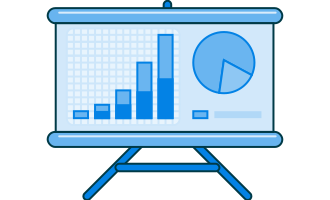
What is Bill Per Cleaning?
It’s your average invoice amount per completed job in a given period. Formula: Total Cleaning Revenue ÷ Number of Completed Cleanings.

Why does Bill Per Cleaning matter?
Raising this KPI increases revenue per visit and improves margins, often reducing direct payroll % to revenue, with no extra marketing or headcount.

How does MaidCentral raise Bill Per Cleaning?
Automated rate increases and bulk adjustments, clear add‑ons in the customer portal, skip/lockout fees, and visibility into over/under time so pricing matches actual effort.
FAQs: Bill Per Cleaning – KPI
What’s a good target for Bill Per Cleaning?
Targets vary by market and service scope. A practical approach is to set a baseline, then aim for a 10–20% lift over the next 6–12 months while watching close rate and churn.
How often should I raise rates?
Review annually at minimum, and use event‑based triggers (time over budget, increased scope, supply costs) for mid‑cycle adjustments. Small, consistent increases (e.g., 3–8%) tend to stick.
How do I calculate it accurately?
Use Total Cleaning Revenue divided by Completed Cleanings for the period. Exclude taxes and tips. Be consistent with inclusions (e.g., whether to include initial/deep cleans) so trends are comparable.
How do I handle customer pushback?
Give clear notice, state the reason (materials, labor, time on site), highlight outcomes (quality, reliability), and offer options (adjust frequency, add‑ons, or a new scope/price alignment).
Should I include taxes, tips, or one‑off fees?
Exclude taxes and tips. Include recurring service charges and standard add‑ons. For one‑off fees, be consistent—either always include or always exclude when trending the KPI.
What are quick wins to increase Bill Per Cleaning?
Standardize add‑on menus, enable annual price adjustments, charge skip/lockout fees, and align price to actual time using over/under time data.